
Despite Confusion over Vaccine Guidance Phoebe Says the Medical Recommendation Hasn’t Changed
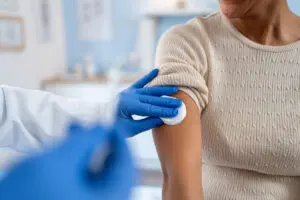
Albany, GA | August 24, 2026 – August is National Immunization Awareness Month, and, as families settle into the new school year, Phoebe reminds parents that immunization schedules for children, teens and adults – recommended by local physicians you trust – remain unchanged and strongly supported by decades of medical evidence.
“The science behind vaccines and the effectiveness of vaccines haven’t changed, so we haven’t changed what we’re doing,” said Derek Heard, MD, Medical Director for Primary Care for Phoebe Physicians.
Despite shifting guidance from the federal government regarding the number of vaccinations needed, organizations including the American Academy of Pediatrics have continued to recommend the fuller, longstanding schedule. Dr. Heard said Phoebe’s guidance to patients remains the same as well.
The standard childhood immunization schedule, covering birth through age 18, continues to include:
- Hepatitis B
- Hepatitis A
- Rotavirus
- Respiratory Syncytial Virus (RSV)
- DTaP (diphtheria, tetanus and pertussis)
- Hib (Haemophilus influenzae type B)
- Pneumococcal vaccine
- Polio
- MMR (measles, mumps and rubella)
- Meningococcal vaccine
- Meningococcal BRSV
- Varicella (chickenpox)
- HPV (human papillomavirus)

Dr. Heard noted that polio remains on the schedule, despite being eradicated in the United States, because it still circulates elsewhere in the world.
“Just because we vaccinate for polio in the United States doesn’t mean that all countries do. The virus still exists in other parts of the world, but because we have vaccinated so well, we don’t see it here,” said Dr. Heard.
For adults, Dr. Heard recommends:
- Annual flu vaccine
- Tdap (the adult formulation of DTaP)
- HPV, for adults who did not receive it as children
- Pneumococcal vaccine, for those 65 and older or with conditions that compromise the immune system, such as diabetes, heart failure, chronic kidney disease, sickle cell disease or COPD
- Shingles vaccine, for adults 50 and older
- COVID-19 vaccine, particularly for those at higher risk
- RSV vaccine, for adults 65 and older
- Catch-up on any childhood vaccines that may have been missed
Dr. Heard said skipping recommended immunizations carries real risks, pointing to recent measles cases in Georgia as an example. Measles, he said, can lead to encephalitis, or swelling of the brain that can cause lasting brain damage, as well as pneumonia severe enough to be fatal.
“We are spoiled in the sense that we’ve forgotten what measles can do. It’s easy for us to say, ‘well, only a small percentage of kids who get measles will die from it.’ But tell the parent whose child gets encephalitis and has brain damage for the rest of their life, or gets pneumonia and has to stay in the hospital for weeks, or the parent whose child dies, that getting a simple immunization was not worth it.”
Dr. Heard also framed immunization as a shared community responsibility. “We’ve signed a social contract with each other as American citizens, that I’m not going to do anything to hurt you if you don’t do anything to hurt me,” he said. “Yes, we are individuals, but we’re in this community together. I may not be the person who gets sick, but my neighbor may have a baby who is immunocompromised. Why would I want to make them sick because I’m bringing something to them that can be deadly and dangerous,” he said.
Dr. Heard emphasized that the recommendations are not based on any single organization or country, but on evidence gathered from medical institutions and health agencies around the world.
“We stand by the science, and we stand by the data. We have hundreds of years of data saying that vaccines work, and we don’t have any significant, credible data saying that they don’t work or that they are causing illness,” he said.
Dr. Heard also pointed to guidance from the World Health Organization, which he said describes immunization as a fundamental cornerstone of global health, an indisputable human right, and one of the most effective public health investments available.
Dr. Heard said the stakes are especially high in southwest Georgia, an area that carries a significant burden of chronic disease, including heart failure, diabetes, hypertension and COPD.
“We can’t afford to base our medical decisions on mistruths and unproven science. We need to base it on those things that we’ve known for decades are important. Immunizing yourself is still one of the easiest, most credible, life-saving things that you can do,” said Dr. Heard.
Dr. Heard urges southwest Georgians to use National Immunization Awareness Month as a time to contact their primary care providers to make sure they and their families are current on immunizations that help prevent serious illnesses.