
Phoebe Donates Advanced Imaging Equipment to Chehaw Park, Transforming Veterinary Care for Albany’s Zoo Animals
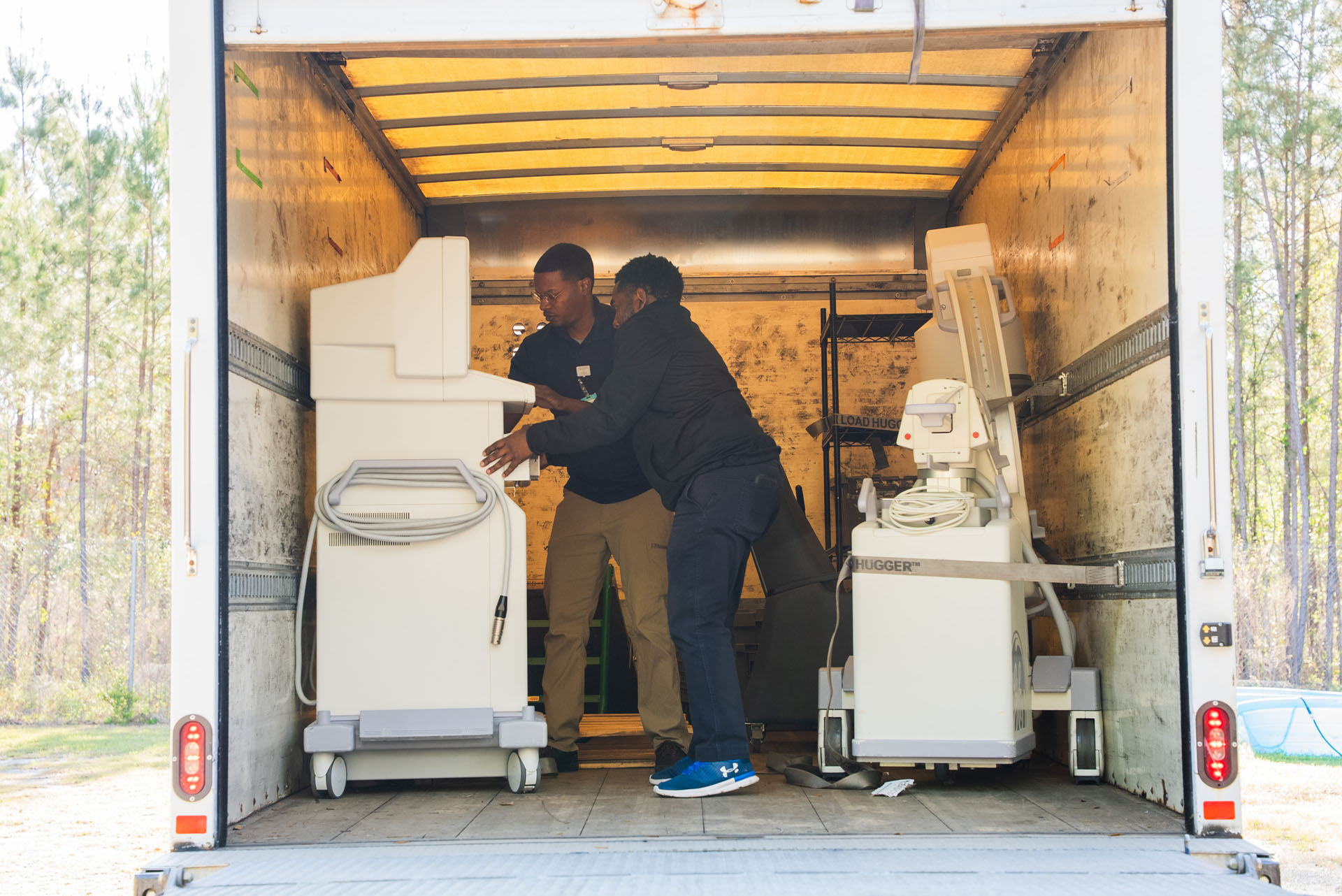
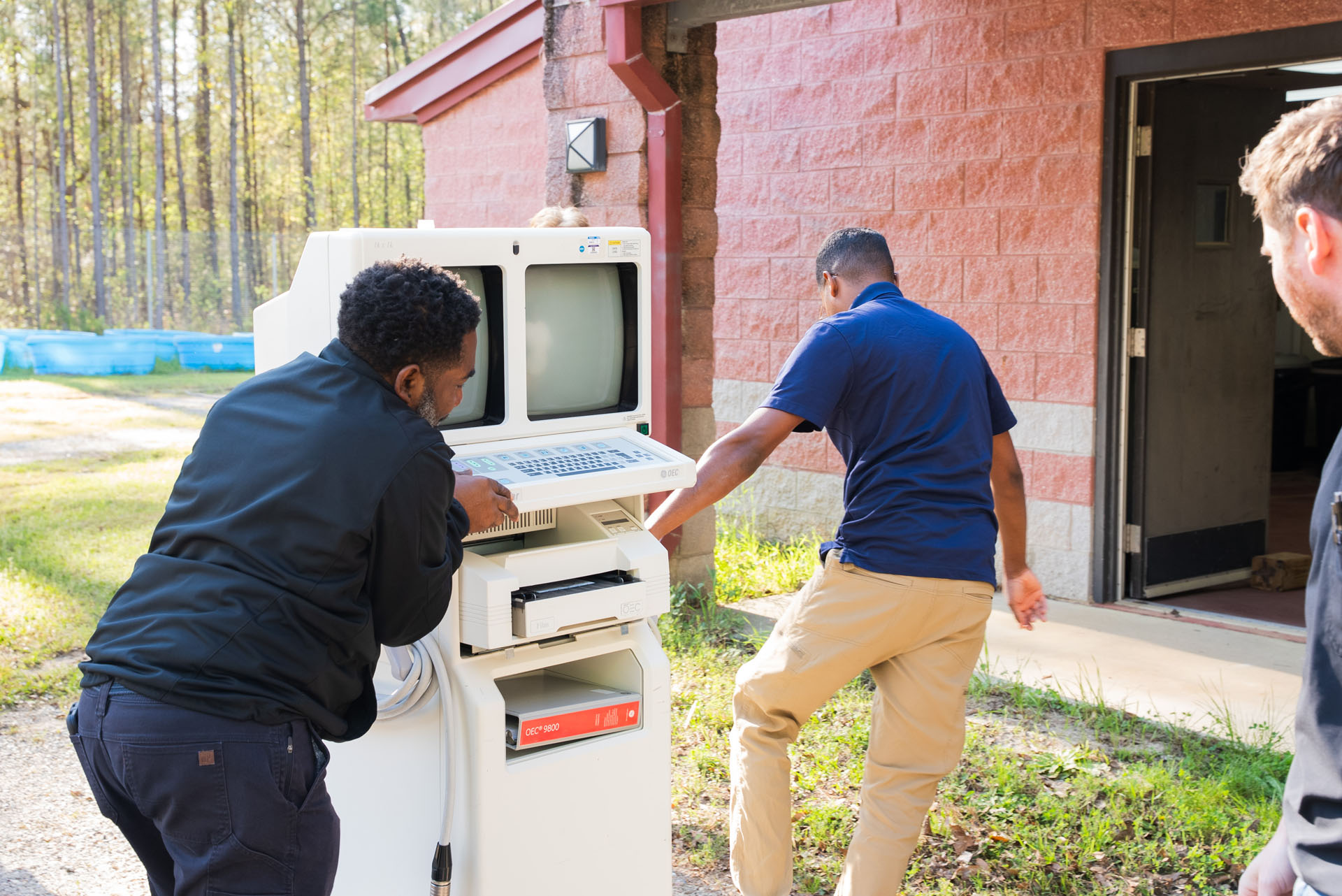
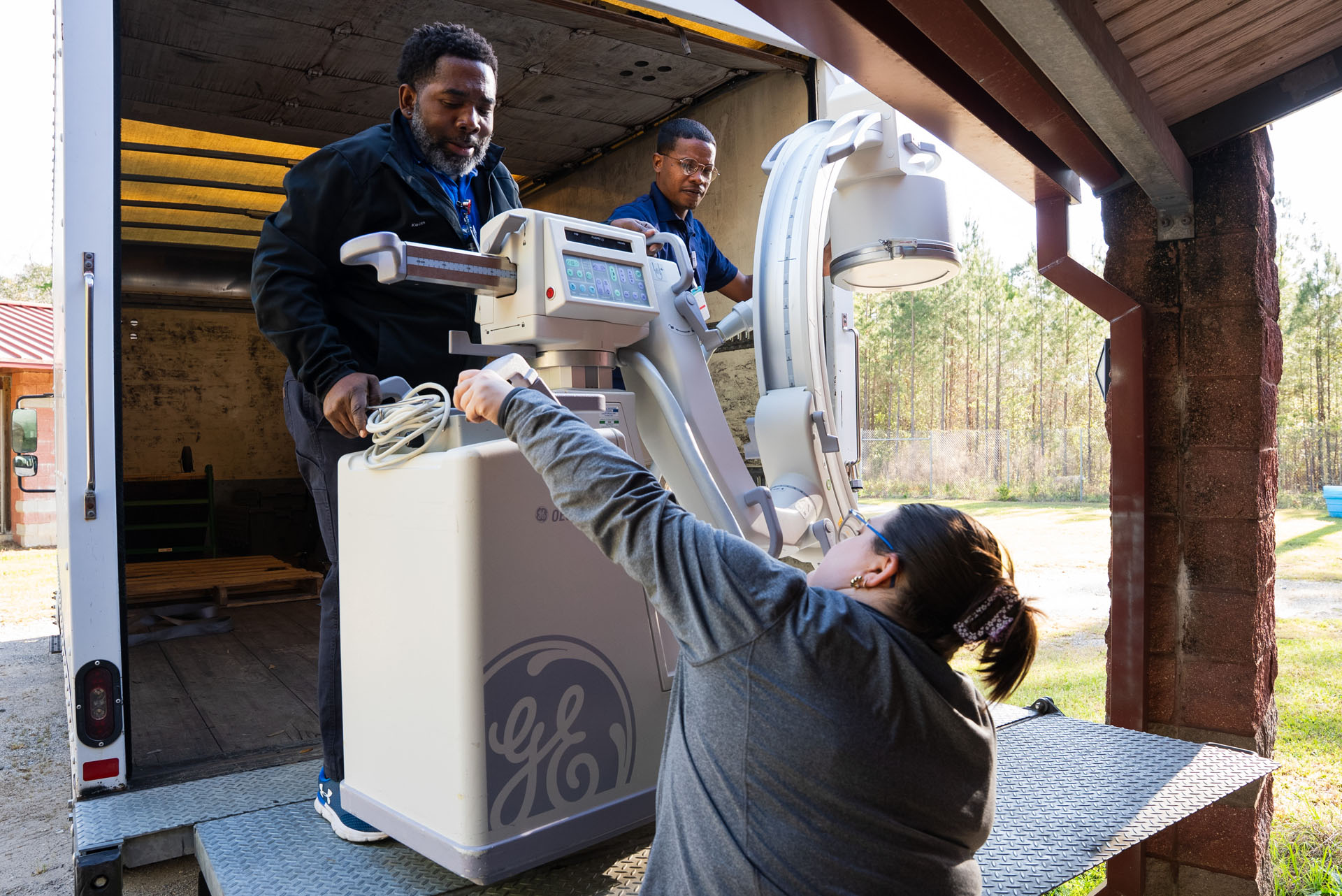
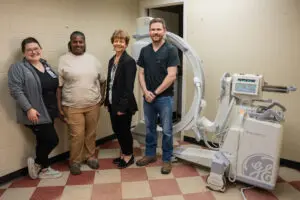 Albany, GA | March 24, 2026 – Chehaw Park & Zoo received a significant donation from Phoebe Putney Memorial Hospital, a C-arm fluoroscopy imaging machine valued at over $100,000 that will transform the way veterinary care is delivered to the zoo’s animals.
A C-arm is a mobile, X-ray-based imaging device named for its distinctive “C”-shaped arm, which connects an X-ray source on one end to an image detector on the other. The equipment will allow veterinary staff to capture real-time, high-resolution, live X-ray images from multiple angles without having to reposition the animal, a critical advantage when working with large or exotic species that can weigh hundreds of pounds. The machine’s flexible arm moves around the animal rather than requiring staff to move the animal around the machine.
The donation came about after Chehaw staff connected with Phoebe Imaging Services Director Tracy Wilkinson at a Phoebe Foundation event. When Wilkinson learned the zoo lacked on-site imaging equipment, she immediately began working to find a solution. When Phoebe recently upgraded to newer imaging technology, the opportunity to donate the outgoing C-arm to Chehaw became a natural fit.
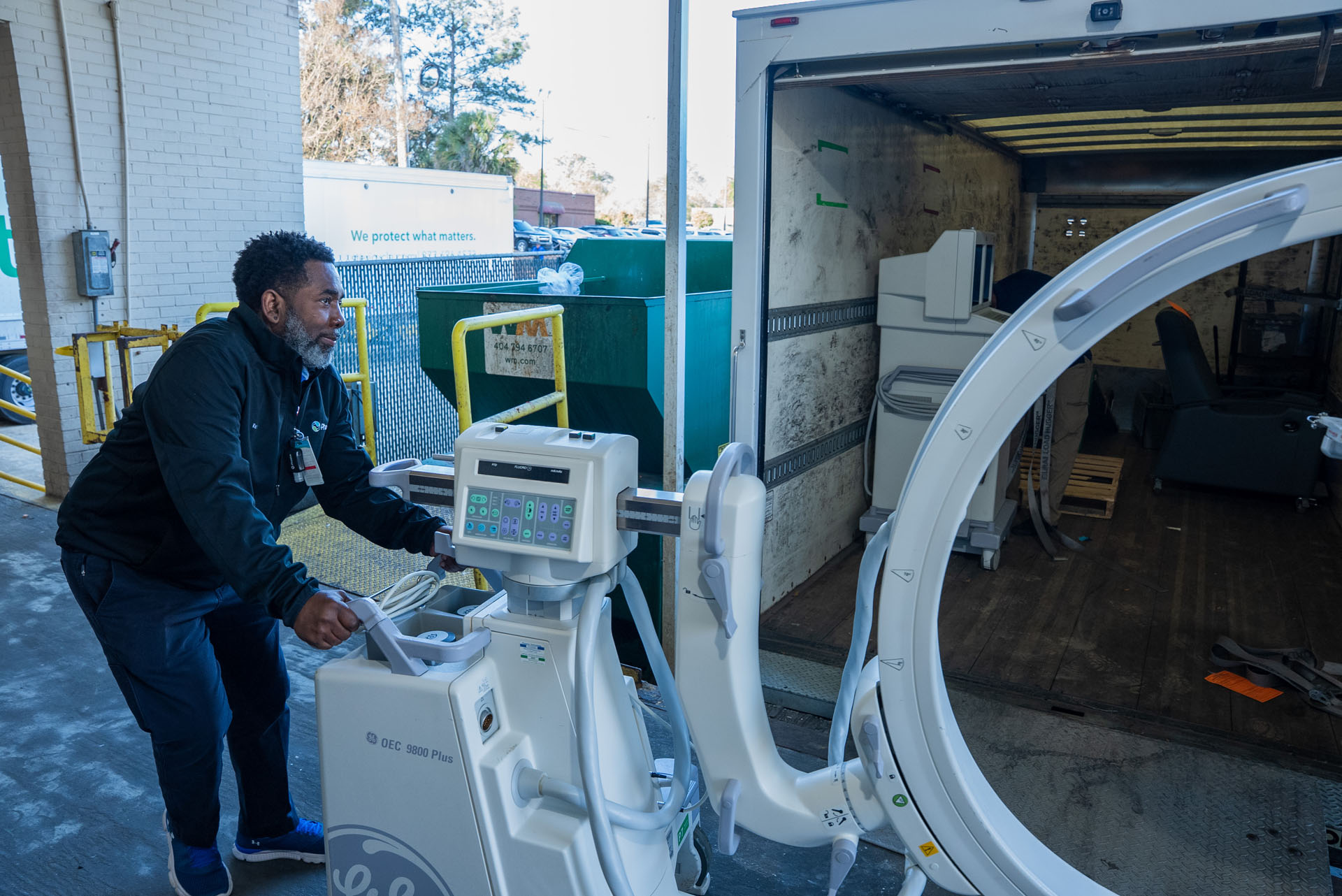
“We recently purchased new technology with more advanced imaging capabilities, but this machine still has a lot of life left in it. Typically, we would just trade it back in to the company that sold it to us, but if we can keep it here in our community to support a great organization like Chehaw, that’s great. We’re excited to be able to help the zoo keep their animals healthy,” said Wilkinson.
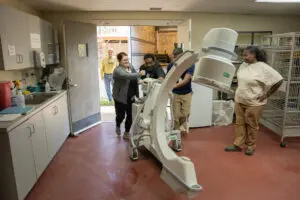 The equipment will be housed in Chehaw’s on-site veterinary clinic and used across a wide range of the park’s animal collection, including bears, cheetahs, red wolves, and other exotic and native species. Previously, animals requiring imaging had to be sedated and transported off-site to Leesburg Animal Hospital, a process that increased stress on the animals, extended the time they needed to remain under sedation, and required scheduling that could mean waiting weeks for non-emergency imaging.
“Our veterinary clinic is set up to house this kind of equipment, but we haven’t actually had any technology like this in many years, so this will be a great improvement for our veterinary program. We’ll be able to use the C-arm on most of our animals, and it will have lots of benefits for our animals. By not having to take them off site, we’ll be able to provide care much more quickly,” said Sam Sassone, Chehaw’s Living Collections Director.
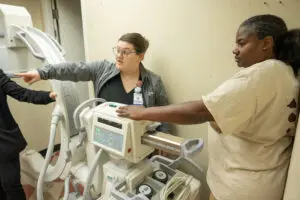 Chehaw’s veterinary care is led by Dr. Austin Mobley of Leesburg Animal Hospital, who regularly visits the park to oversee the health of its diverse animal collection. Caring for exotic species requires a different and constantly evolving skill set compared to traditional domestic animal medicine.
“Their body systems are a lot different. There’s not a lot of training you receive in vet school for some of this, so a lot of it is doing your own research. We do cheetahs, rhinos, bears, red wolves, their anatomical structures are all different, what works for one may not work for another, and you have to make informed decisions on the best treatment plan for each one. That’s what makes this equipment so valuable. It gives us better information to make better decisions,” said Dr. Mobley.
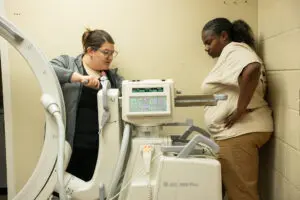 Dr. Mobley noted that the C-arm’s flexible design is especially valuable for a zoo setting. Unlike a traditional static X-ray machine, the C-arm’s movable arm can rotate and angle around an animal, eliminating the need to manually reposition large or sedated animals for different imaging views. It can also be moved outside the clinic if needed for larger animals.
The new equipment will support both routine and emergency diagnostics. Chehaw’s veterinary team plans to incorporate the machine into a preventive care program, conducting imaging on animals at least every two years to monitor developing conditions in addition to responding to acute health concerns as they arise. The value of that approach has already been demonstrated. After imaging revealed arthritic changes in one of Chehaw’s bears, staff were able to begin a targeted treatment plan. The bear has since shown significant improvement in mobility.
“This is going to help us out a lot. Currently, for something like a routine diagnostic on one of our cheetahs, we have to sedate the animal, transport it to the hospital, complete the imaging, transport it back, wake it up, and monitor its recovery. With this equipment here on site, that process becomes a lot shorter and a lot more seamless. We can move them from their exhibit straight to the clinic and straight back. It’s less stressful for the animal, less stressful for the staff, and there are far fewer chances for anything to go wrong,” said Dr. Mobley.
Chehaw’s zoo is open daily from 9:30 a.m. – 4:30 p.m. More information about the park’s programs is available at www.chehaw.org.