
Phoebe Trauma Surgeon Has New Research on Tracheostomy Complications Accepted for Publication
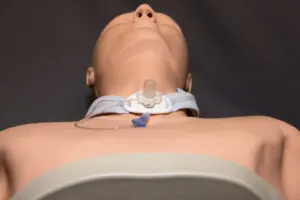
 Albany, GA | October 9, 2026 – A Phoebe trauma surgeon with an extensive history of research, scholarly writing and teaching is about to publish new research aimed at improving care for critically ill patients who undergo a procedure to help them breathe. David Kashmer, MD, examined complications associated with tracheostomies, a hole that surgeons make in the front of the neck and into the windpipe where a tube is inserted during a surgical procedure called a tracheotomy.
A tracheostomy may be needed during trauma care, when a patient may need to be on a ventilator for an extended period or because of medical conditions that block or narrow the airway. Even when a tracheotomy is done correctly, patients can still face complications that may not be caused by the procedure but related to ongoing care the patients need.
Dr. Kashmer and his team reviewed the current standard of tracheostomy care and problems seen across the country. The goal is to use those findings to guide the design of new devices and processes to help prevent complications.
“A lot of what I write about is the buildup to creating a new medical device or process that can positively influence patients I’ll never even see face to face,” said Dr. Kashmer.
The paper has been accepted for publication and will appear in an upcoming issue of Journal of Thoracic Disease. Dr. Kashmer’s research has long focused on the airway and on how surgeons learn to manage it in emergencies. He holds a patent on an airway-access device he helped develop, and he is a member of the patent team for a second airway device. He has also studied how medical students and resident surgeons learn to access the airway, work that bears directly on emergency care.
Dr. Kashmer has also edited a publication on modern medical simulation, which covers how simulation helps clinicians master new techniques safely. He has written multiple books and chapters of textbooks on topics including trauma program management, medical education, and games for health.
Dr. Kashmer joined Phoebe nearly two years ago, drawn by the health system’s growth and its trajectory in clinical care. He also saw a chance to expand medical education and improve services in trauma and acute care surgery.
“When you have good clinical care, you have a foundation with processes to start doing research that help other people. “Phoebe is in a really good spot for the future,” said Dr. Kashmer.
Phoebe leaders say the community is fortunate to have physicians like Dr. Kashmer, with high levels of experience and expertise, providing care in southwest Georgia
“Physicians like Dr. Kashmer are helping elevate Phoebe’s reputation as a destination for high-quality clinical care, medical innovation, and physician education. His commitment to research not only advances patient care but also strengthens our efforts to attract outstanding physicians and build the graduate medical education programs that will help train the next generation of healthcare providers in southwest Georgia,” said Estrellita Redmon, MD, President of Phoebe Physicians. “We are grateful for Dr. Kashmer’s research, and we look forward to additional scholarly activity from other outstanding physicians at Phoebe.”
Phoebe’s partnership with Morehouse School of Medicine (MSM) will establish new physician residency programs at Phoebe in multiple specialties – including general surgery and emergency medicine – while expanding clinical training opportunities for Morehouse medical students.
“Part of why I joined Phoebe was the growth and improvement I felt it was due for clinically. The natural next step is expanding medical education for students and even residents one day and improving services in areas like trauma and acute care surgery,” said Dr. Kashmer.
As a Clinical Professor of Surgery at MSM, Dr. Kashmer plays an important role in strengthening the relationship between Phoebe and MSM. Published research such as Dr. Kashmer’s helps build the academic foundation needed to support expanded graduate medical education through future residency training programs in southwest Georgia.